
The Fallows. 69-70 The Spaces Between Competition Proposal.
the roots
The character of Salt Lake City today remains deeply influenced by the conceptual underpinnings of its founding. Though highly evolved, its form and character remain a testament to the resilience of its root ideological – and morphological – systems. This project is premised upon the idea that the city’s development lies not in the rejection or redefinition of these systems, but in mining the latent and continued potentials of their authentic character.
The most distinct feature of the city’s urban form is certainly the Plat of Zion. However, what is often less recognized is that it was not so much an urban plan as much as a set of strategic rules designed to support and manifest a vision of contemporary life.* Underpinning the system was recognition of a key strategic opportunity – namely, the fact that there were still rich and fertile lands that could support the type of productive and healthy life Smith intuited was possible. Salt Lake proved to be one such ideal site, allowing these imperatives to thrive.
This project is designed as a celebration and extension of this dimension of the city’s legacy. Beyond a formal proposition, it is a set of guiding principles designed to manifest the contemporary potential of Salt Lake City – furthering its native resilience and progressive development through both form and life.
*one need only look at the trials and tribulations of Smith’s life to understand the degree to which he challenged the norms of the time through a deeply, if not radically, contemporary view of religious and agrarian life.
the rotation
The city’s resilience has been in part due to the adaptive potential of Smith’s grid, but equally to the collective intelligence that has driven its urbanization over time. Where once rich crops grew, rich urban form has emerged, producing a unique and vibrant city core central to the city’s identity.
In recent decades however, the ‘urban crops’ of the city’s centre have become less vital, with a notable decline of mixity. On the other hand, there are clear indications that a renewed interest in the core is emerging, as increasing numbers of citizens opt in to setting up residence within its limits.
Just as the Plat of Zion emerged from a strategic understanding of latent spatial potentials and emergent societal forces of the time, this project positions these forces in strategic alignment – but in this case at an urban scale and in 21st century contemporary terms.
the fallows
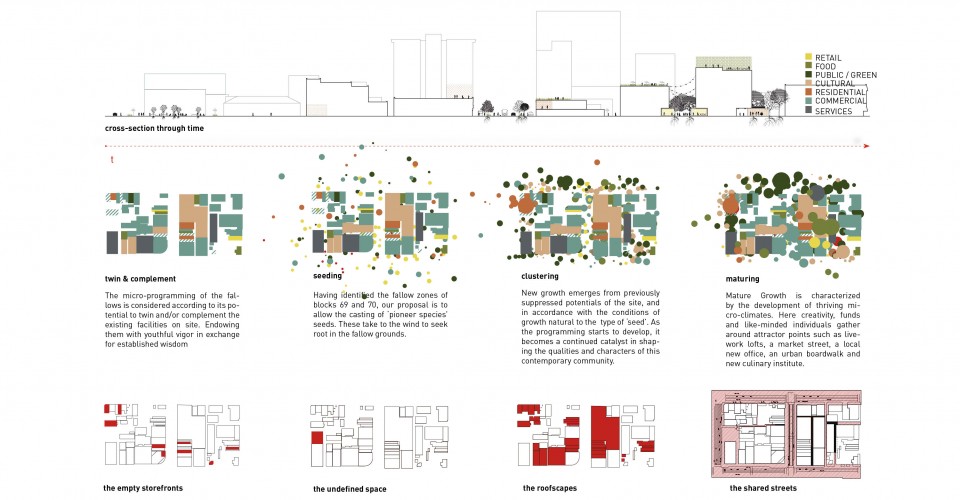
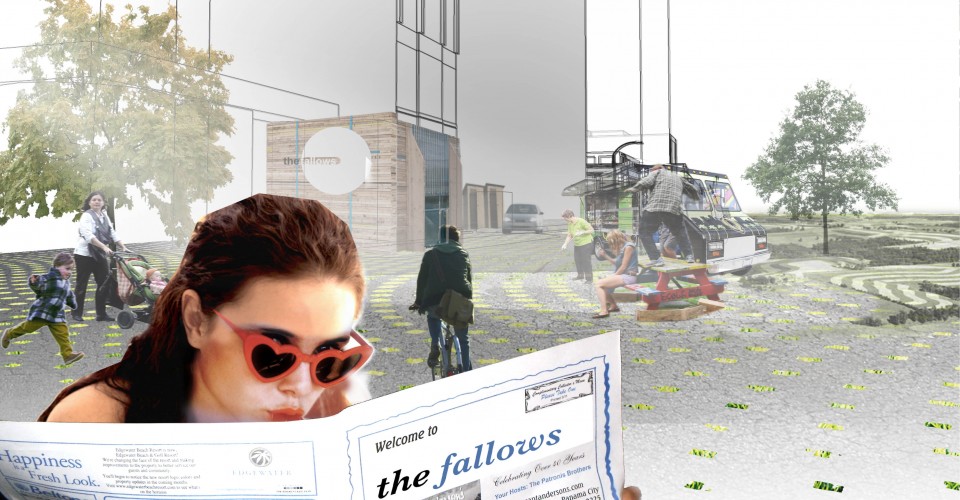
While the conflation of the agrarian and urban logics of Salt Lake City has produced its contemporary character, it has also produced a set of ambiguous urban spaces as an inevitable byproduct. Far from dead spaces, we understand these sites as Salt Lake city’s urban fallows – spaces rife with the dormant potential to support the next rotation (or generation) of growth.
Beyond even the designated in-between spaces, we propose an extended consideration to all the underutilized spaces contained within the blocks – including empty storefronts, vacant (or underused) stories within buildings, and the roofscapes. We propose these spaces to be known collectively as ‘The Fallows’, with the idea that it might eventually become synonymous with a certain emergent urban ethos and culture, with the potential to grow spatially and ideologically beyond the 69 and 70 into a larger urban network.
seeding the fallows
Salt Lake City has a notably young population when compared with national norms (SLC median age is ~31 vs. the US at ~37). This represents a great source of energy and opportunity to grow the city into its next phase of development. The young population of Salt Lake City has witnessed the city evolve beyond its manufacturing legacy, newly endowing it with 21st c. values that prioritize denser, cleaner, more vibrant and culturally active city life. The new economy is a shared one, and one that can thrive on the collective drive to move back from the suburbs and in to the city again.
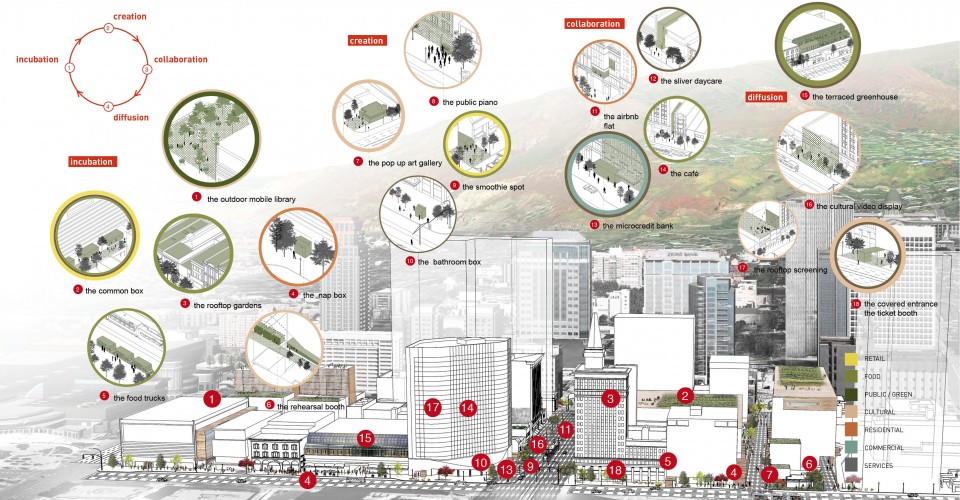
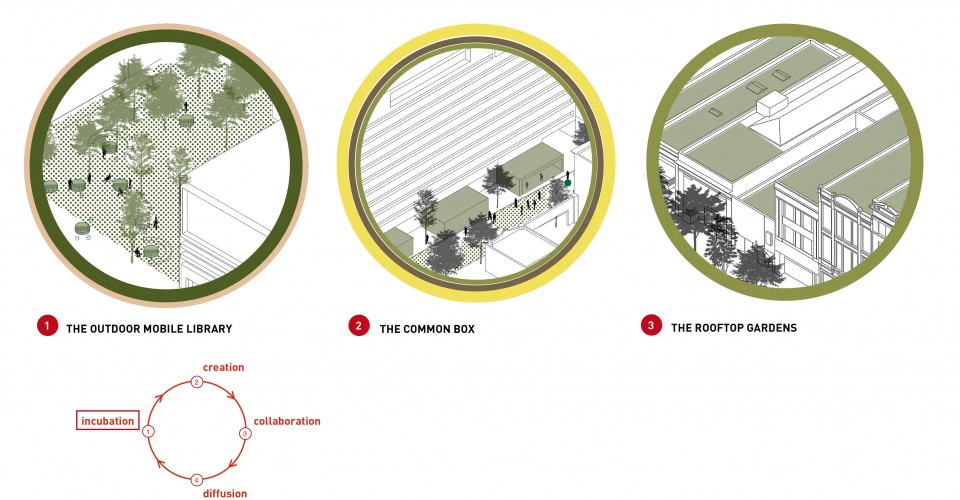
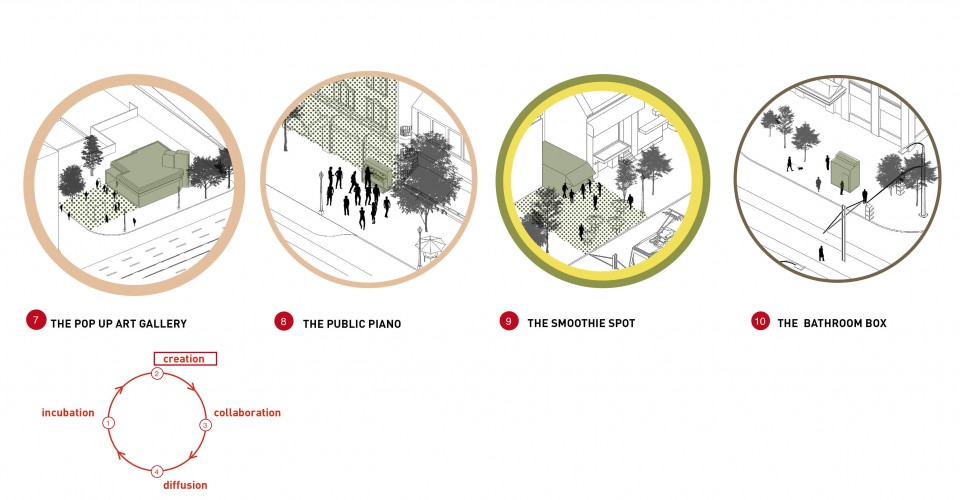
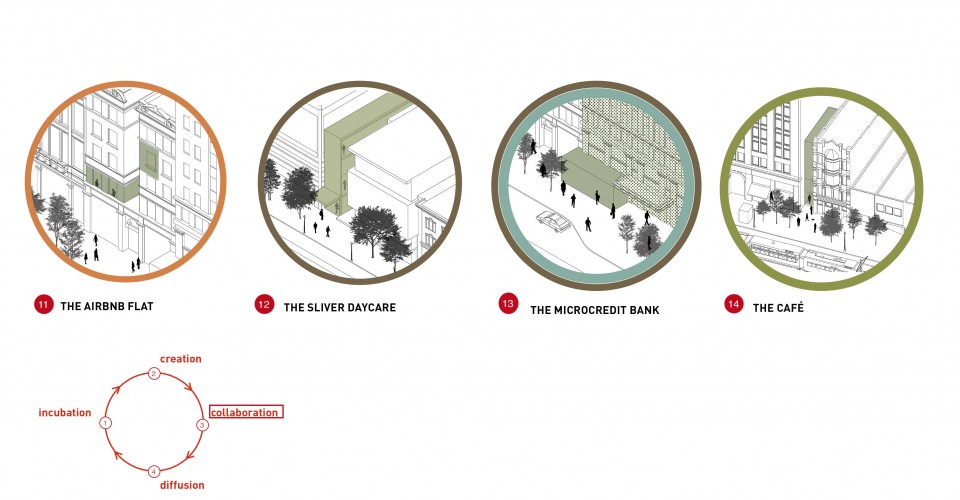
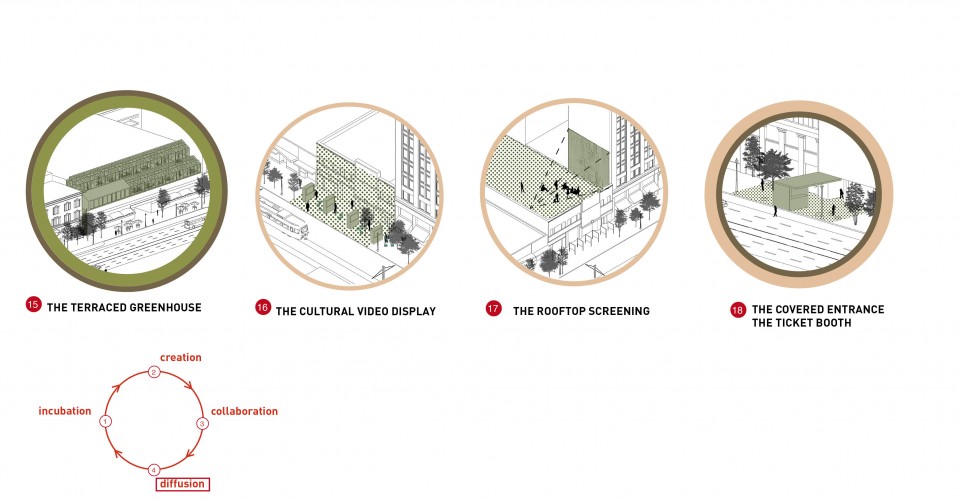
As a result, we envision the act of seeding The Fallows as a combination of larger scale catalytic interventions and micro-scale innovations supported at a policy level, but developed by the city’s residents. Though distilled into different programmatic categories, we imagine the new life in The Fallows to be unified by a common spirit of innovation – with emergent programs that foster incubation, creation, collaboration and diffusion across subjects, media and expertise.
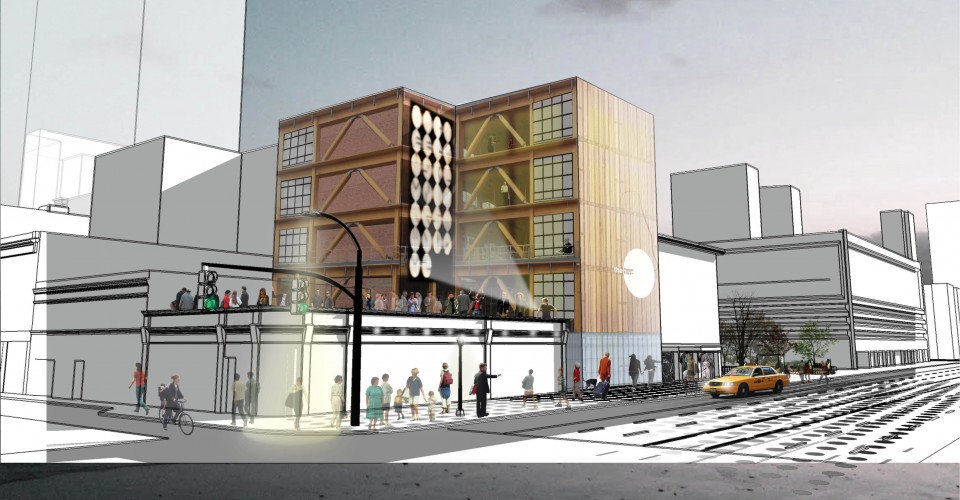
Though not technically located within the competition site, we propose a primary catalytic intervention on block 69. We propose a mixed-use loft-type building that can support a multitude of functions from the domestic to the cultural to the entrepreneurial. These flexible spaces will allow for the infusion of a resident population that can serve as a critical mass to catalyse, perpetuate and pollinate activity on the extended site through their active presence. At the micro-scale, residential capacity is further supported through the facilitated use of existing spaces within the existing fabric that could be governed by a share economy platform such as Airbnb or a local version thereof (‘slumber in The Fallows!’). These spaces could be used by the short-term visitor or by medium term visitors such as performers or artists in residence.
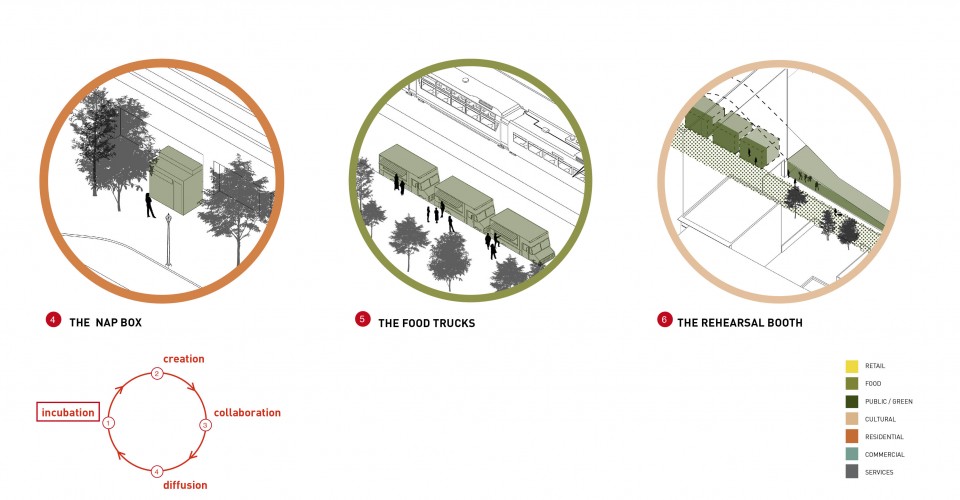
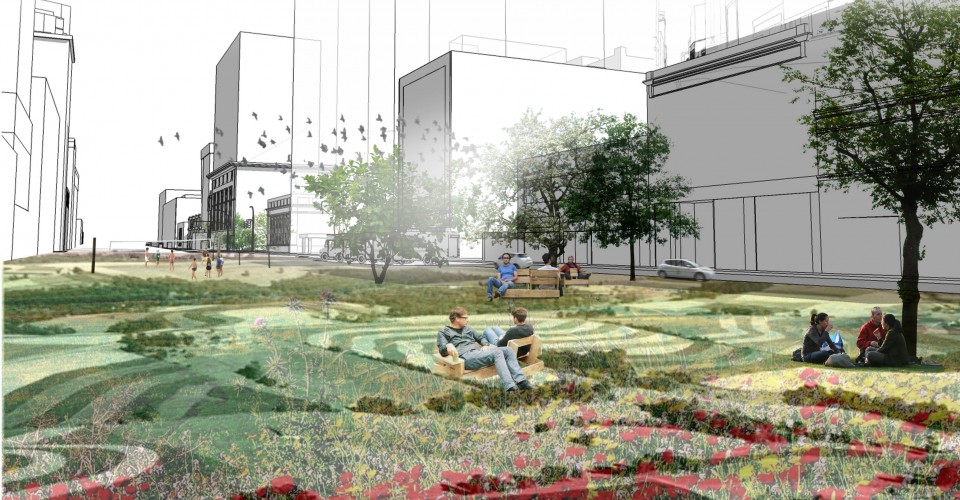
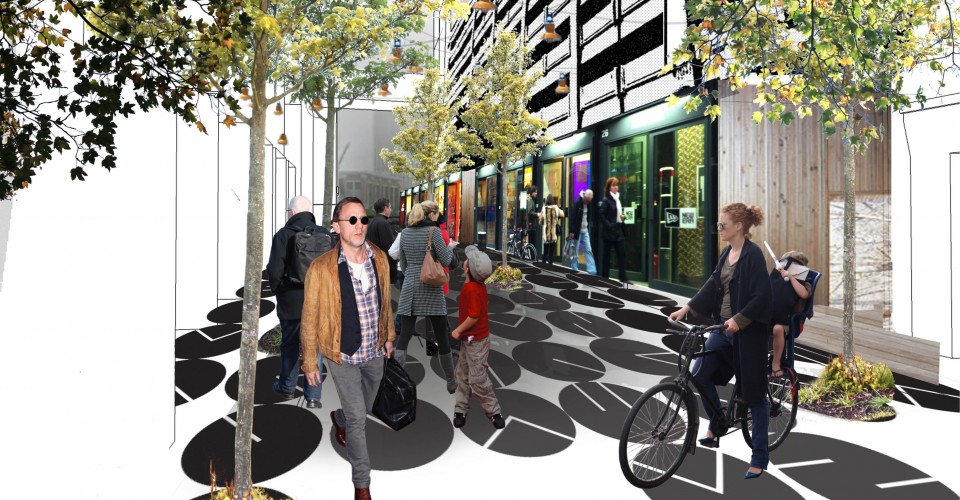
With a burgeoning resident population, we also propose the conversion of 100 South street’s north side (that might maximally benefit from southern exposure) to create a linear park that could eventually anchor a larger green network that might weave its way through the city – including the pocket parks on site, programmed to support itinerant programming such as a mobile outdoor library or seasonal art or architectural installations. Equally in support of the residents, we propose the revival of Regent street as a vibrant commercial corridor – human-scaled and bespoke, as well as the provision of distributed amenities including food trucks, pop-up boutiques, and cafes with locally sourced food.
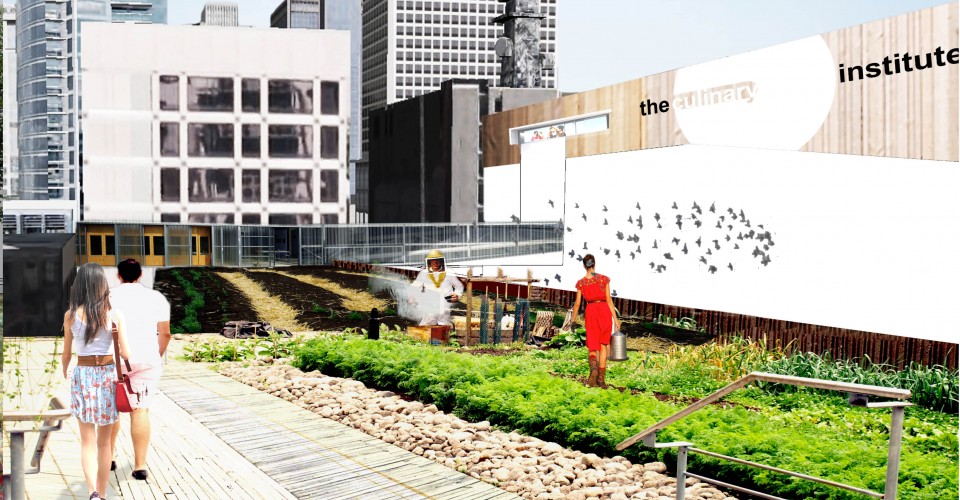
Roofs play an important role in greening the site and furthermore revitalizing the agricultural traditions of the city through education and development of a culture of urban agriculture. We imagine that eventually these functions could support a culinary school (herein proposed as a rooftop extension of the plum alley parking structure, and connecting by aerial bridge to its agricultural fields atop the new UPAC building), complementing the current cultural make up of the blocks.
The imagined micro-scale interventions are numerous and diverse – ranging from nap boxes to micro-credit storefronts to parasitic daycare centers. What all the proposed interventions share is a foundation of imagined possibilities within these new territories so aptly suited to the legacy of Salt Lake City and its future potential.