
Masterplan 2027: Cultivating the complex.
The new protagonists
Never before has the university held such potency within our contemporary economic, social and environmental fabric. As our primary resource and repositories of knowledge, Universities have the potential to be the effective incubators of our future growth…. but so too do our cities. Complexity, diversity, mobility, mixity, and density are all urban priniciples that have been directly correlated to creative productivity of a place. If universities are our repositories of knowledge, then cities are factories of ideas.
In light of University of Manitoba’s contemporary agenda, we first questioned whether these potentials could be twinned. Could the innovation/knowledge repository that is the University of Manitoba be further activated and optimized through the infusion of urban principles?
In light of the city of Winnipeg and the University’s role and geographic position within it, we further questioned whether the converse could be equally true: could the city be further activated and optimized through the infusion of the University’s legacy of resources and contemporary progressive values?
The project we here propose is built upon the hypothesis that this synergy is not only possible, but imperative – we must embrace the notion that knowledge is our new public domain and innovation our collective project. We are living through a critical moment, in which the city and the University are poised to be key protagonists.
Reversing the tide
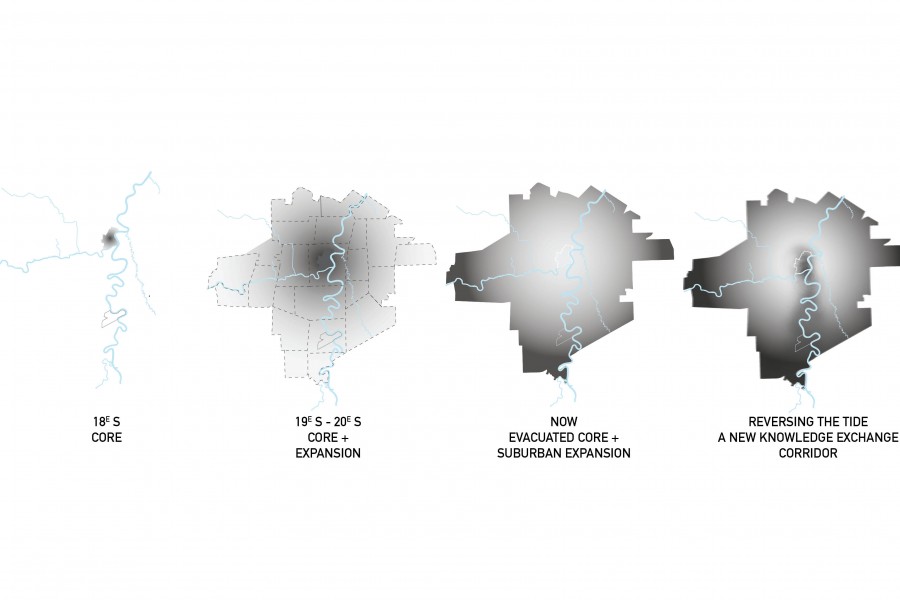
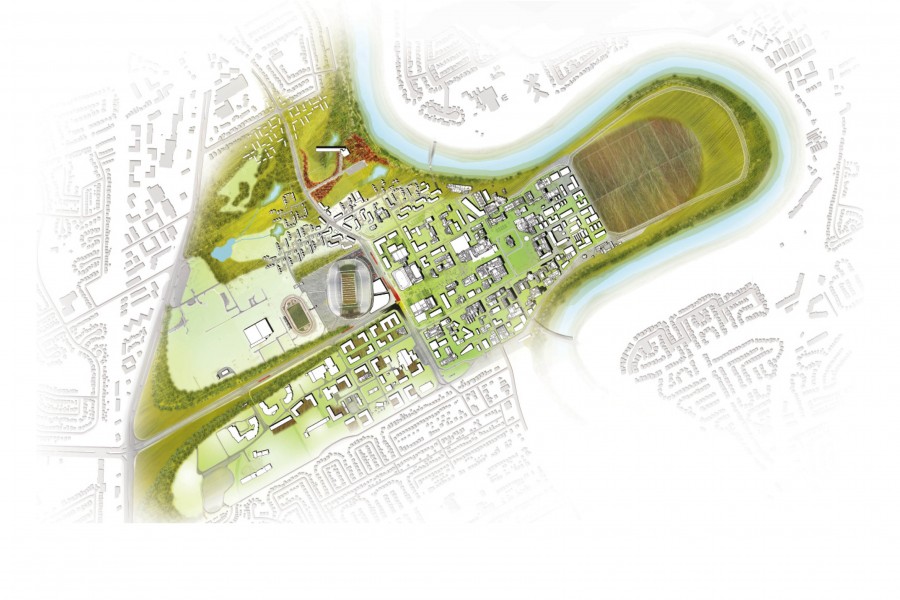
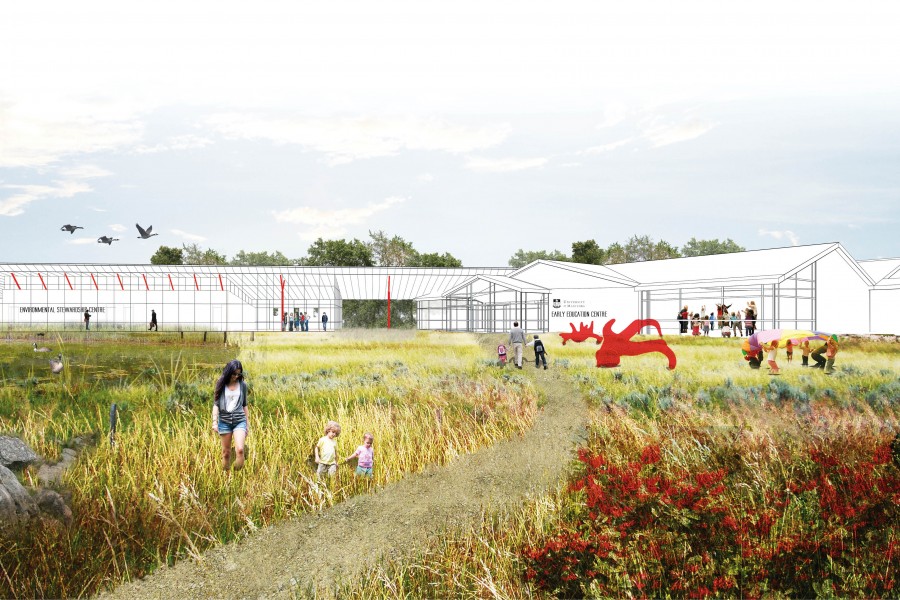
Winnipeg, like many cities, is facing the consequences of decades of suburban expansion that have left it with an impoverished core. The current culture of the University of Manitoba has been greatly influenced by the implications of this urban trend. It must not repeat the same logic. With its progressive thinking and agenda, the University is in a unique position to embody the antithesis of this thinking on its own campus – i.e. densifying and investing in its core. Furthermore, this gesture has the potential to initiate an operative change within the city – stimulating a reverse tide of densification towards the centre, along what we envision as the new Winnipeg Knowledge Exchange Corridor.
From masterplan to strategic design
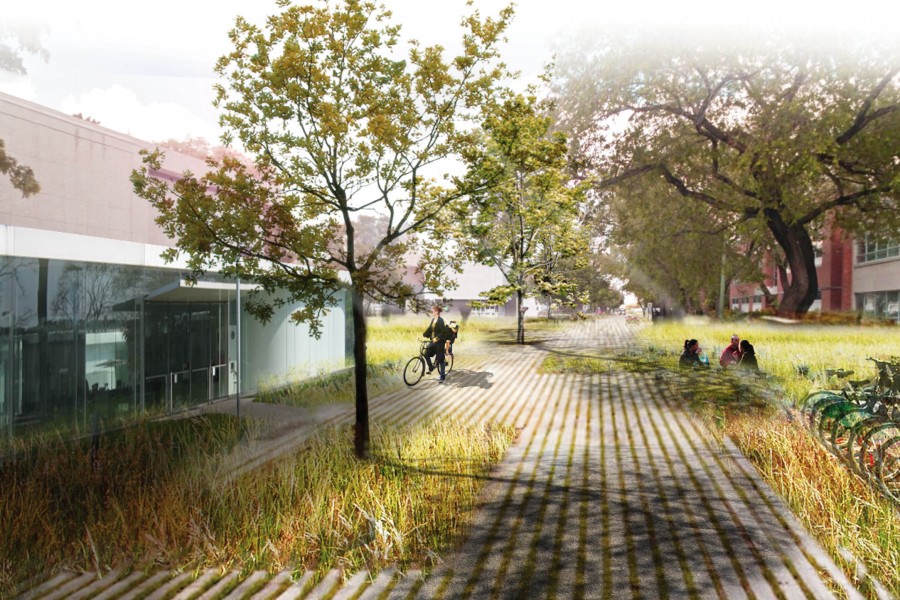
A knowledge system is not only conceptual but physical. Our built environment – through its multiple layers of performative value – is a critical dimension. It is at once the accumulated material legacy of historic ideas and values, and in turn an active player in shaping the qualities and characters of its contemporary communities.
What is so exciting about this project is that it provides a unique opportunity to set these dimensions of historic legacy, systemic potential and human capacity into a highly robust system of critical contemporary relevance. In order for this to remain the case through time however, the university must be understood as a dynamic and evolving entity – not only in terms of its programmatic dynamism, but also in terms of its physical manifestation.
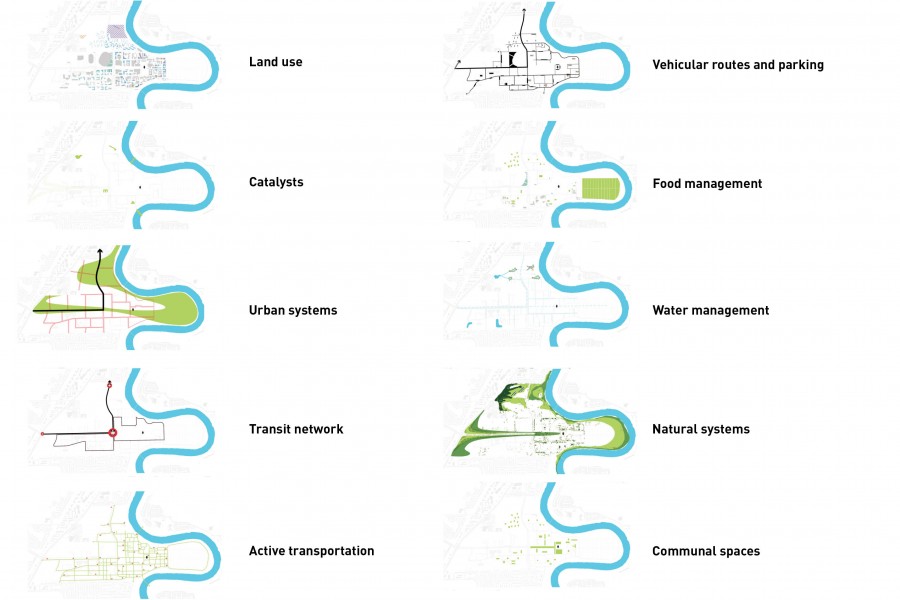
Our proposal is thus not simply a masterplan designed to anwer to the university’s current needs, but rather a strategic design of an evergreen method that can con- tinuously absorb the university’s evolving priorites and strategically orient them towards planning decisions that reinforce core potentials and values.